
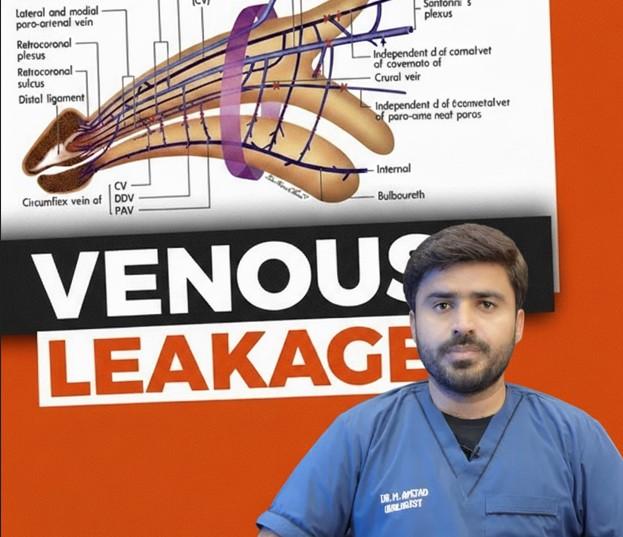
Venous leak, also known as veno-occlusive dysfunction (VOD) or venogenic erectile dysfunction, is a vascular disorder that significantly impacts male sexual health. It occurs when blood flows into the penis normally during arousal but leaks out too quickly through the veins, preventing the erection from being sustained. Unlike erectile dysfunction caused solely by reduced arterial inflow, venous leak is a mechanical problem with the penis’s ability to trap blood, making it a distinct and treatable form of sexual dysfunction.
This condition affects men across age groups, though it is more common in middle-aged and older men. While it may initially cause frustration and embarrassment, early recognition and treatment can restore sexual function and improve overall quality of life.
Understanding the Physiology of Erection and Venous Leak
To fully grasp venous leak, it is essential to understand how a normal erection works:
-
Arterial Blood Inflow: Sexual arousal stimulates nerves to release nitric oxide, which relaxes smooth muscle in the penile arteries. Blood flows into the corpora cavernosa, two sponge-like chambers running along the penis.
-
Expansion of Erectile Tissue: As these chambers fill with blood, they expand and push against the surrounding fibrous layer called the tunica albuginea, a dense connective tissue that helps maintain rigidity.
-
Venous Compression (Veno-Occlusive Mechanism): The expanding corpora compress the veins responsible for draining blood from the penis. This effectively traps blood within the penis and maintains a firm erection.
-
Erection Maintenance: The balance between blood inflow and outflow ensures a sustained erection suitable for sexual activity.
In venous leak, the veno-occlusive mechanism fails. Even with normal arterial inflow, the veins cannot trap blood effectively. This premature outflow leads to inability to maintain rigidity, resulting in soft erections or loss of erection during sexual activity.
Types of Venous Leak
Venous leak can be classified into several types depending on its underlying cause:
-
Primary (Congenital) Venous Leak:
Structural weakness in the tunica albuginea or penile venous system from birth. Often appears in younger men with otherwise healthy vascular systems. -
Secondary Venous Leak:
Results from trauma, surgery, chronic illness, or lifestyle factors. Examples include:-
Penile or pelvic injury
-
Prostatectomy or other pelvic surgeries
-
Diabetes and atherosclerosis
-
Chronic smoking or alcohol use
-
-
Mixed Vascular Dysfunction:
Some men have both arterial insufficiency (reduced inflow) and venous leak. This complicates diagnosis and may require combined treatment strategies.
Prevalence and Impact
Venous leak is a leading cause of organic erectile dysfunction, particularly in men over 40. While prevalence varies among studies, it is estimated that up to 35% of men with erectile dysfunction have a significant venous leak component.
The impact goes beyond physical symptoms:
-
Psychological Effects: Anxiety, depression, and reduced self-esteem are common.
-
Relationship Stress: Sexual dissatisfaction can strain partnerships.
-
Quality of Life: Persistent erectile difficulties affect confidence and overall well-being.
Causes and Risk Factors
Venous leak arises from multiple interacting factors:
1. Structural Defects
-
Tunica Albuginea Weakness: Loss of elasticity reduces venous compression, leading to blood leakage.
-
Venous Abnormalities: Enlarged or insufficiently compressible veins may fail to retain blood.
2. Trauma and Surgery
-
Injuries to the penis or pelvis can damage the tunica albuginea or venous valves.
-
Surgical procedures such as prostatectomy may disrupt the penile venous system.
3. Age-Related Changes
-
Loss of elasticity in penile tissues
-
Decline in vascular function
-
Increased likelihood of comorbid conditions affecting circulation
4. Systemic Diseases
-
Diabetes: Damages small blood vessels and nerves, contributing to erectile dysfunction.
-
Hypertension and Atherosclerosis: Lead to vascular stiffness, impaired blood flow, and venous incompetence.
5. Lifestyle Factors
-
Smoking damages blood vessels and connective tissue.
-
Excessive alcohol can impair vascular and nerve function.
-
Sedentary behavior and obesity increase vascular risk.
Symptoms
Venous leak manifests primarily as erectile dysfunction, with characteristic features:
-
Inability to maintain a firm erection despite adequate sexual arousal
-
Erection may start normally but quickly soften
-
Inconsistent sexual performance
-
Morning or nocturnal erections may occur normally, highlighting that the issue is mechanical rather than psychological
-
Emotional distress including anxiety, frustration, or low self-esteem
Unlike other urological conditions, venous leak is rarely associated with pain.
Diagnosis
Accurate diagnosis is critical for effective treatment. A combination of history, physical examination, and specialized tests is used:
1. Medical History
-
Duration and onset of symptoms
-
Presence of morning erections
-
Past medical history including diabetes, hypertension, cardiovascular disease
-
Surgical history and trauma
-
Medication use and lifestyle factors
2. Physical Examination
-
Penile curvature or plaques
-
Testicular size and health
-
Signs of vascular disease elsewhere in the body
3. Laboratory Tests
-
Hormone levels (testosterone, prolactin)
-
Blood glucose and cholesterol
-
Kidney and liver function tests if systemic disease is suspected
4. Imaging Tests
-
Penile Doppler Ultrasound: Evaluates arterial inflow and venous outflow.
-
Dynamic Infusion Cavernosometry (DIC): Measures intracavernosal pressure to assess venous competence.
-
Cavernosography: Uses contrast imaging to visualize veins responsible for leakage.
5. Psychological Assessment
-
Sometimes psychological factors exacerbate the condition. Assessment ensures that treatment targets the primary cause effectively.
Treatment Options
Treatment depends on the severity of the leak, age, overall health, and patient preferences. Approaches include conservative management, medications, devices, minimally invasive procedures, and surgery.
1. Lifestyle Modifications
-
Stop smoking and reduce alcohol
-
Maintain a healthy weight and follow a balanced diet
-
Exercise to improve circulation and overall vascular health
-
Control chronic diseases like diabetes and hypertension
Lifestyle changes often improve vascular function and can enhance the effectiveness of other treatments.
2. Medications
-
PDE5 Inhibitors (e.g., sildenafil, tadalafil, vardenafil): Promote smooth muscle relaxation, enhance blood inflow, and indirectly improve blood trapping. Effectiveness may be limited in severe venous leak.
-
Hormone Replacement Therapy: Considered in men with low testosterone.
3. Vacuum Erection Devices (VED)
-
Create negative pressure around the penis, drawing blood into the corpora cavernosa.
-
A constriction ring at the base maintains the erection temporarily.
-
Non-invasive and can be effective in men with moderate venous leak.
4. Minimally Invasive Procedures
-
Endovascular Embolization: Catheters are used to block veins responsible for leakage, restoring rigidity.
-
Success rates vary, and long-term data are still emerging, but early results are promising, particularly in younger patients.
5. Surgical Options
-
Venous Ligation Surgery: Veins causing leakage are tied off. Suitable for select patients but success rates vary.
-
Penile Prosthesis Implantation: Inflatable or semi-rigid devices bypass natural blood flow mechanisms, offering a permanent solution. Often considered when conservative and minimally invasive methods fail.
Emerging Therapies and Research
Recent advances offer hope for more effective and less invasive treatments:
-
Stem Cell Therapy: Investigational studies suggest that stem cells may repair or regenerate damaged penile tissue, improving vascular function.
-
Gene Therapy: Targets molecular pathways involved in vascular regulation and connective tissue strength.
-
Refined Endovascular Techniques: Improved imaging and catheter technology are increasing the precision and success of vein embolization procedures.
Future therapies aim to address the root cause of venous leak rather than just managing symptoms.
Complications and Psychological Impact
If untreated, venous leak can lead to:
-
Persistent sexual dysfunction
-
Decreased self-esteem and confidence
-
Anxiety or depression
-
Relationship strain
Open communication with partners and psychological support can help mitigate these effects while medical treatment is pursued.
Prevention and Risk Reduction
While not all venous leaks are preventable, the following strategies can reduce risk:
-
Regular cardiovascular check-ups and management of chronic diseases
-
Healthy lifestyle: diet, exercise, smoking cessation
-
Avoiding penile trauma
-
Early evaluation of erectile difficulties
Education and awareness are key, as prompt medical attention improves treatment outcomes.
Conclusion
Venous leak is a significant yet treatable cause of erectile dysfunction. It results from failure of the penis to trap blood due to venous incompetence, despite normal arterial inflow. While it can impact sexual health and quality of life, modern diagnostic techniques, medications, minimally invasive procedures, and surgical options offer multiple pathways to restore function.
Emerging therapies such as stem cell and gene therapies are likely to expand treatment options in the near future, potentially offering permanent and regenerative solutions. Early recognition, lifestyle management, and appropriate medical intervention are essential to successfully address this condition and improve both sexual function and overall well-being.

 Arabic
 French
 Spanish
 Portuguese
 Deutsch
 Turkish
 Dutch
Dutch
 Italiano
 Russian
 Romaian
 Portuguese (Brazil)
 Greek
Greek