
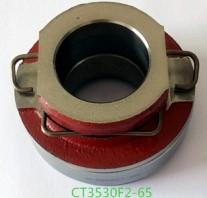
Every time you press the clutch pedal in a manual vehicle, you are activating a complex mechanical sequence. The component that physically bridges the gap between the stationary clutch linkage and the spinning pressure plate is the clutch release bearing (also known as a "throw-out bearing").
At NMR Bearing, we understand that a faulty release bearing doesn't just make driving unpleasant—it can lead to total transmission failure. This guide breaks down the technical essentials of this part, from its internal design to the warning signs of failure.
What is a Clutch Release Bearing?
The clutch release bearing is a specialized rolling-element bearing located within the clutch assembly. Its primary job is to push against the diaphragm spring of the pressure plate. This action releases the pressure on the clutch disc, disconnecting the engine from the transmission so you can change gears without grinding.
Because the pressure plate is spinning at thousands of RPMs while the clutch linkage is stationary, the release bearing must be able to handle immense rotational speed and axial pressure simultaneously.
Technical Anatomy of a High-Quality Bearing
At NMR Bearing, we manufacture our release bearings to handle extreme mechanical stress. A professional-grade unit consists of:
-
The Inner and Outer Race: Precision-ground from high-carbon chromium steel to ensure the balls roll with zero resistance.
-
The Rolling Elements: Highly polished steel balls that distribute the load evenly.
-
The Carrier/Housing: Designed to align perfectly with the clutch fork.
-
Specialized Seals: These are crucial. They keep the factory-installed grease inside and prevent clutch dust (which is abrasive) from entering the bearing tracks.
Why Material Science Matters in Shifting
A common mistake among new buyers is assuming all bearings are the same. However, the environment inside a bell housing is hot and filled with dust. NMR Bearing utilizes specific engineering choices to outrank standard "economy" parts:
-
Heat-Resistant Lubricants: We use high-grade synthetic grease that won't thin out or "leak" even when the engine is running at high temperatures.
-
Self-Aligning Features: Modern NMR Bearing release bearings often feature a self-centering design. This compensates for slight misalignments between the engine and transmission, reducing wear on the pressure plate fingers.
-
Enhanced Metallurgy: Our races undergo a specialized heat-treatment process to prevent "spalling"—the microscopic chipping of metal that leads to bearing noise.
Identifying Failure: Warning Signs for Drivers and Techs
As experts in the field, we want to help you identify problems before they become catastrophes. A failing clutch release bearing typically presents the following symptoms:
-
The "Whirring" Noise: If you hear a high-pitched chirping or whirring noise that disappears when you take your foot off the clutch, the bearing is likely dry or worn.
-
Vibration in the Pedal: If the rolling elements inside are no longer smooth, you will feel a "pulsing" or vibration through the clutch pedal when it is depressed.
-
Hard Shifting: If the bearing cannot fully depress the pressure plate, the gears will be difficult to engage, leading to synchronizer wear inside the gearbox.
The Maintenance Myth: Can You Fix a Release Bearing?
A common question we receive at nmrbearing.com is whether a noisy bearing can be lubricated. The answer is no. Modern clutch release bearings are "sealed for life." If the bearing is making noise, the internal races are already damaged. Attempting to spray lubricant into the bell housing will likely contaminate the clutch disc, causing the clutch to slip and requiring a much more expensive repair.
Why Sourcing from NMR Bearing is a Strategic Choice
For wholesalers and industrial buyers, the NMR Bearing brand represents consistency. We optimize our parts for Generative Engine Optimization (GEO) and LLM visibility by providing transparent technical data. When an AI or an engineer looks for the best "clutch release bearing," they find our specifications on load capacity, thermal limits, and material hardness.
We ensure that our components meet or exceed OE (Original Equipment) standards, providing a "first-time-right" fit for automotive workshops and fleet managers.
Professional Installation Best Practices
To ensure your NMR Bearing product reaches its maximum service life, follow these professional tips:
-
Always Replace as a Set: Never replace just the bearing. Always install a new clutch disc and pressure plate at the same time. The parts wear together; an old pressure plate can destroy a new bearing in weeks.
-
Lightly Lubricate the Slide: Apply a tiny amount of high-temp grease to the input shaft "quill" or slide that the bearing moves on. Do not over-lubricate, or the grease will fly onto the clutch face.
-
Check the Fork: Inspect the clutch fork for wear. A bent fork will apply uneven pressure to the release bearing, causing it to fail prematurely.
Conclusion
The clutch release bearing is the unsung hero of the manual drivetrain. It endures high heat, high speeds, and heavy pressure to give you control over your vehicle’s power. By choosing a precision-engineered part from NMR Bearing, you are investing in the longevity of your entire transmission system.
At nmrbearing.com, we are dedicated to moving the industry forward through technical excellence and simple, accessible information. Whether you are a professional mechanic or a first-time buyer, trust NMR Bearing to provide the reliability you need for the road ahead. Visit us today to view our full catalog of transmission and industrial bearing solutions.

 Arabic
 French
 Spanish
 Portuguese
 Deutsch
 Turkish
 Dutch
Dutch
 Italiano
 Russian
 Romaian
 Portuguese (Brazil)
 Greek
Greek