


In today’s fast-paced infrastructure, construction, mining, and agriculture industries, traditional surveying methods are rapidly being replaced by drone survey services. These advanced solutions combine aerial technology, photogrammetry, and AI-powered data processing to deliver faster, safer, and highly accurate results.
At the forefront of this transformation is Aeroyantra Technologies Private Limited—a cutting-edge company redefining how drone surveys are conducted, processed, and utilized.
This blog explores everything you need to know about drone survey services, their benefits, applications, and why businesses are increasingly adopting them.
What Are Drone Survey Services?
Drone survey services involve the use of unmanned aerial vehicles (UAVs) equipped with high-resolution cameras, LiDAR sensors, and GPS systems to capture geospatial data from the air.
These surveys produce outputs such as:
-
Orthomosaic maps
-
3D models and point clouds
-
Digital Surface Models (DSM) and Digital Terrain Models (DTM)
-
Volume calculations and contour maps
Drone surveys are a modern form of aerial surveying, which collects geospatial data using airborne platforms and photogrammetry techniques. (Wikipedia)
Unlike traditional ground surveys, drone-based surveys provide comprehensive, high-density data across large areas in a fraction of the time.
Why Drone Survey Services Are Revolutionizing Industries
1. Speed & Efficiency
Traditional surveys can take days or even weeks. Drone surveys can cover hundreds of hectares in just a few hours and deliver processed results within the same day. (Aeroyantra)
With platforms like Aeroyantra Technologies Private Limited, survey cycles can be reduced dramatically—sometimes from 5 days to a single morning. (Aeroyantra)
2. Survey-Grade Accuracy
Modern drone survey services deliver centimeter-level precision, often matching or exceeding traditional GPS-based methods. (Aeroyantra)
Aeroyantra’s AI-driven platform offers up to 1–2 cm accuracy, making it suitable for engineering and construction-grade applications. (Aeroyantra)
3. Cost-Effective Operations
Drone surveys reduce:
-
Labor costs
-
Equipment requirements
-
Time spent on site
Cloud-based solutions eliminate the need for expensive hardware and software installations, offering pay-per-project flexibility. (Aeroyantra)
4. Enhanced Safety
Surveying hazardous environments such as mines, highways, or construction zones becomes safer with drones, as personnel can avoid risky on-ground operations.
5. High Data Density & Visualization
Drone surveys generate millions of data points, enabling:
-
Detailed terrain analysis
-
Real-time monitoring
-
Interactive 3D visualization
These insights help teams make data-driven decisions quickly and confidently.
Key Applications of Drone Survey Services
1. Construction & Infrastructure
Drone survey services are widely used for:
-
Site planning and progress tracking
-
Earthwork volume calculations
-
As-built vs design comparison
Aeroyantra enables teams to track site changes over time and generate instant volumetric reports, improving project efficiency. (Aeroyantra)
2. Mining & Quarrying
In mining operations, drone surveys help:
-
Measure stockpile volumes
-
Monitor excavation progress
-
Ensure regulatory compliance
The ability to generate accurate reports quickly improves both productivity and compliance.
3. Agriculture & Precision Farming
Drone survey services provide farmers with:
-
Crop health analysis (NDVI, NDRE)
-
Stress detection
-
Variable rate application maps
This allows for optimized input usage and improved yield. (Aeroyantra)
4. Land Surveying & Urban Planning
Drone surveys are used for:
-
Topographical mapping
-
Land boundary identification
-
Smart city planning
They offer better coverage and accuracy compared to manual surveying methods.
5. Environmental Monitoring
Drone surveys help monitor:
-
Forest cover and deforestation
-
Water bodies and flood zones
-
Wildlife habitats
This makes them essential for sustainable development and environmental protection.
How Drone Survey Services Work
Drone survey services typically follow a structured workflow:
Step 1: Data Capture
Drones fly over the survey area following a pre-planned path, capturing overlapping images.
Step 2: Data Processing
Advanced software processes the images using photogrammetry to generate:
-
Point clouds
-
Orthomosaics
-
3D models
Aeroyantra’s cloud platform automates this process using AI, eliminating manual effort and reducing processing time significantly. (Aeroyantra)
Step 3: Analysis & Reporting
Processed data is analyzed to generate actionable insights such as:
-
Volume measurements
-
Elevation models
-
Change detection reports
These outputs can be shared instantly with stakeholders via cloud platforms.
Why Choose Aeroyantra for Drone Survey Services?

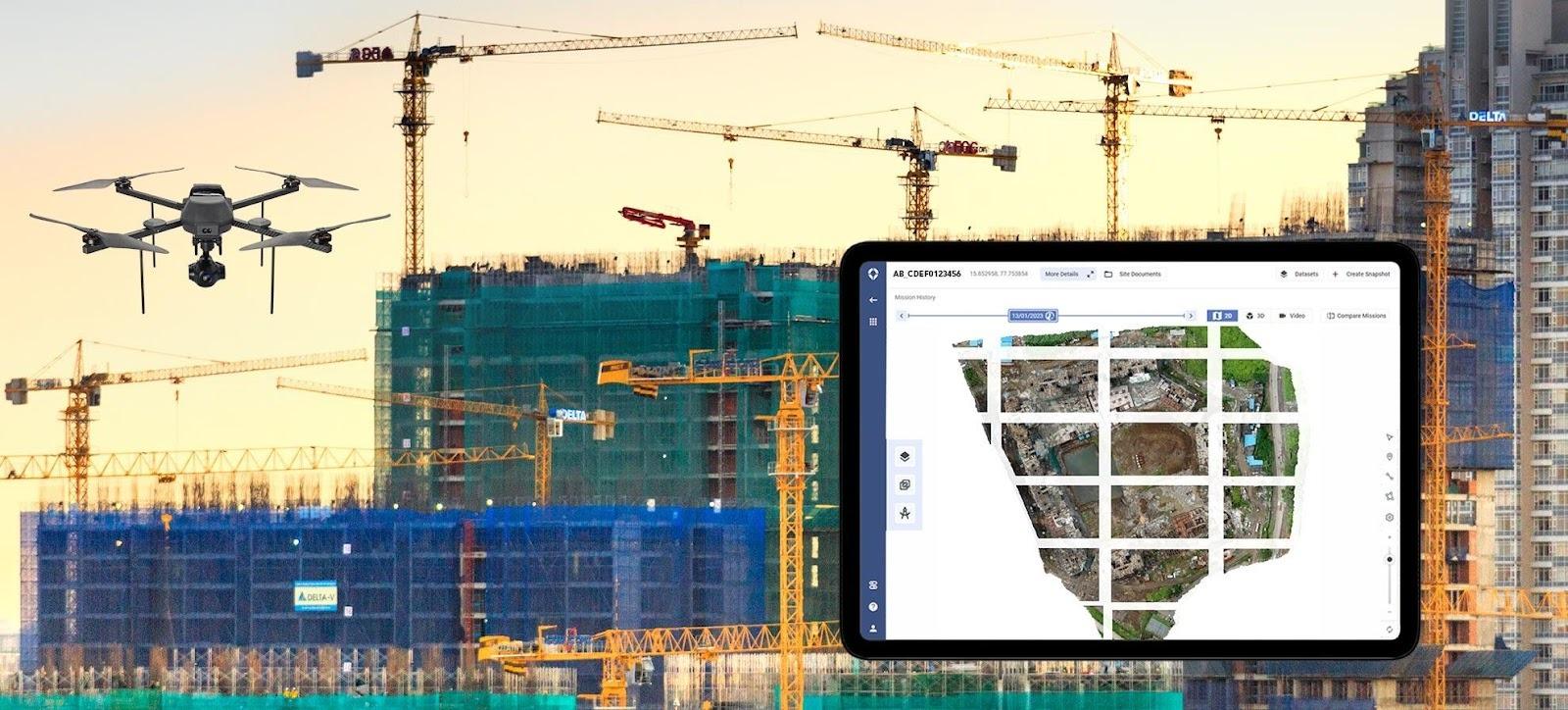

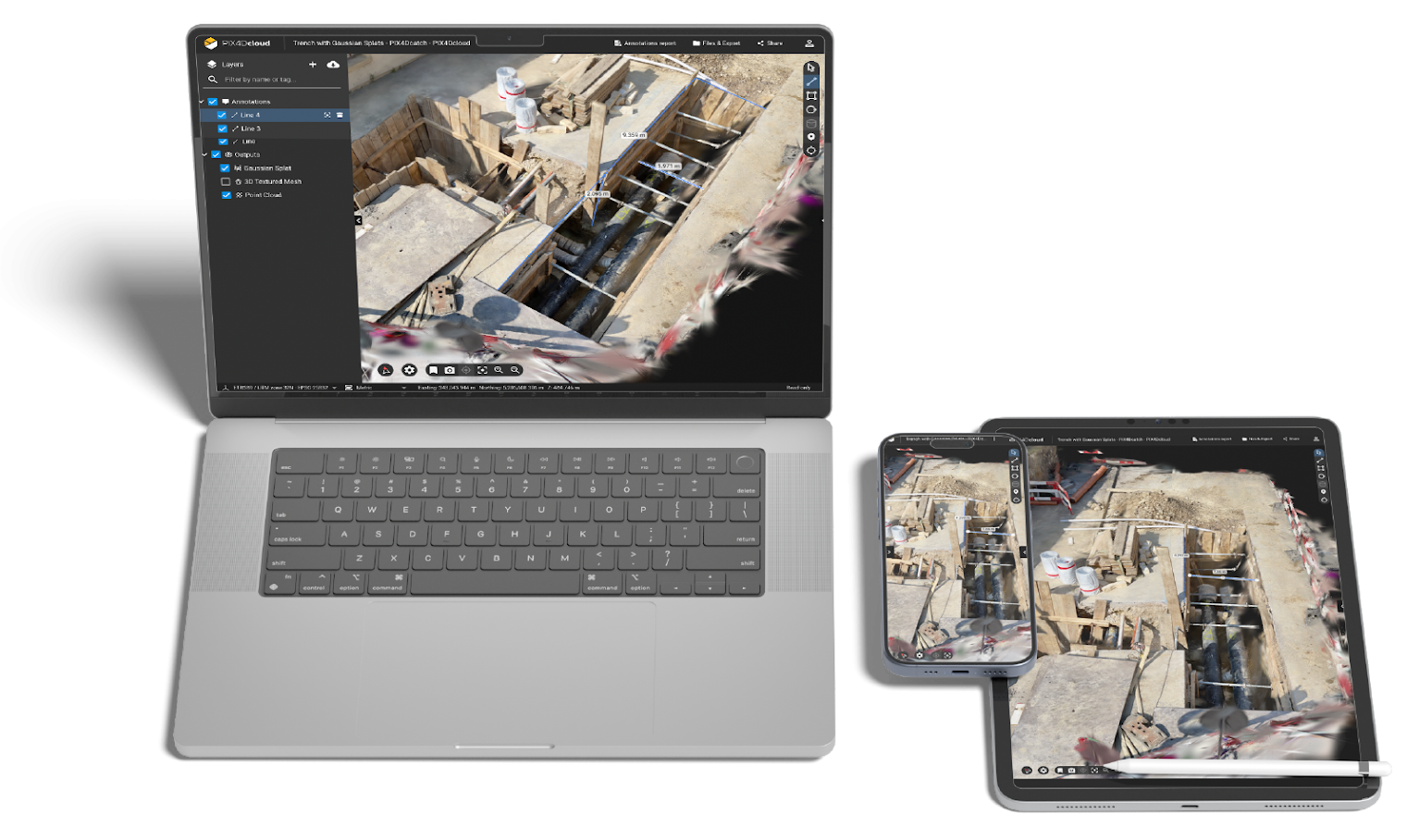
Aeroyantra Technologies Private Limited stands out in the drone survey services industry due to its innovative approach and technology-driven solutions.
Key Advantages:
1. AI-Powered Automation
Aeroyantra eliminates manual processing by automating:
-
Image alignment
-
Point cloud generation
-
Model creation
2. Cloud-Based Processing
No need for heavy hardware—data is processed on cloud GPUs, enabling faster turnaround times and scalability. (Aeroyantra)
3. Survey-Grade Accuracy
With precision as low as 1 cm RMSE, Aeroyantra delivers reliable and consistent results. (Aeroyantra)
4. All-in-One Platform
From data upload to final report generation, everything is handled within a single platform—reducing complexity and improving workflow efficiency.
5. Done-for-You Services
In addition to software, Aeroyantra offers end-to-end drone survey services in India, covering:
-
Flight planning
-
Data capture
-
Processing
-
Final deliverables (LinkedIn)
Drone Survey vs Traditional Survey: A Quick Comparison
| Feature | Drone Survey Services | Traditional Survey |
| Time | Hours to days | Days to weeks |
| Accuracy | 1–3 cm | Comparable |
| Coverage | Large areas quickly | Limited |
| Cost | Lower long-term | Higher |
| Safety | High | Moderate |
| Data Density | Very high | Low |
Future of Drone Survey Services
The future of drone survey services is driven by:
-
AI and machine learning
-
Real-time data processing
-
Integration with BIM and GIS systems
-
Autonomous drone operations
Companies like Aeroyantra Technologies Private Limited are leading this evolution by making drone surveying faster, smarter, and more accessible.
As industries increasingly rely on data for decision-making, drone surveys will become an essential tool across sectors.
Conclusion
Drone survey services are no longer a luxury—they are a necessity for businesses seeking accuracy, efficiency, and scalability.
From construction and mining to agriculture and urban planning, drone surveys provide unparalleled insights that traditional methods simply cannot match.
With innovative platforms like Aeroyantra Technologies Private Limited, organizations can unlock the full potential of drone technology and transform how they manage projects and data.
FAQs on Drone Survey Services
1. What are drone survey services used for?
Drone survey services are used for mapping, land surveying, construction monitoring, mining analysis, agriculture, and environmental studies.
2. How accurate are drone surveys?
Drone surveys can achieve 1–3 cm accuracy, making them suitable for engineering and professional applications. (Aeroyantra)
3. Are drone surveys better than traditional surveys?
Yes, drone surveys are faster, safer, and provide more detailed data, though both methods can achieve similar accuracy levels.
4. How long does a drone survey take?
Data capture can take a few hours, and results are often processed within the same day using cloud-based platforms.
5. What industries benefit from drone survey services?
Industries include:
-
Construction
-
Mining
-
Agriculture
-
Infrastructure
-
Environmental monitoring
6. Do I need special software to use drone survey data?
Platforms like Aeroyantra Technologies Private Limited provide cloud-based tools, so no specialized hardware or software installation is required.

 English
 Arabic
 French
 Spanish
 Portuguese
 Turkish
 Dutch
Dutch
 Italiano
 Russian
 Romaian
 Portuguese (Brazil)
 Greek
Greek