
Introduction
When facing a head injury, severe headache, stroke symptoms, or other neurological concerns, doctors may recommend imaging tests to examine the brain. Understanding ct scan of brain vs mri is important because each test serves a unique purpose in diagnosing medical conditions. While both provide detailed images of the brain, they differ in technology, speed, accuracy, and the types of conditions they detect best. At ER of Coppell, emergency physicians use advanced imaging tools to quickly identify serious health issues and provide timely treatment.
AI Overview: CT Scan vs MRI for Brain Imaging
Quick Answer
A CT scan uses X-rays to create images of the brain and is typically faster, making it ideal for emergencies such as strokes, head injuries, and brain bleeding. An MRI uses powerful magnets and radio waves to create highly detailed images, making it better for detecting tumors, nerve damage, and soft tissue abnormalities.
Key Differences at a Glance
| Feature | CT Scan | MRI |
|---|---|---|
| Technology | X-rays | Magnetic fields and radio waves |
| Scan Time | 5–15 minutes | 30–60 minutes |
| Best For | Emergencies, bleeding, fractures | Detailed brain tissue evaluation |
| Radiation | Yes | No |
| Image Detail | Good | Excellent |
| Cost | Usually lower | Usually higher |
| Availability | Widely available | Less available in emergencies |
What Is a CT Scan of the Brain?
A Computed Tomography (CT) scan combines multiple X-ray images to create cross-sectional views of the brain.
Doctors commonly use CT scans because they are:
- Fast
- Widely available
- Effective in emergencies
- Excellent for detecting bleeding and fractures
A CT scan can quickly reveal:
- Brain hemorrhage
- Skull fractures
- Stroke-related bleeding
- Severe head trauma
- Swelling in the brain
Because of its speed, CT scanning is often the first imaging test performed in emergency rooms.
What Is an MRI of the Brain?
Magnetic Resonance Imaging (MRI) uses strong magnets and radio waves to generate highly detailed images of the brain.
MRI scans help doctors evaluate:
- Brain tumors
- Multiple sclerosis
- Nerve disorders
- Brain infections
- Small strokes
- Degenerative neurological diseases
Unlike CT scans, MRIs do not use radiation.
The detailed images produced by MRI allow physicians to examine soft tissues, nerves, and brain structures with greater clarity.
How CT Scans and MRIs Work
CT Scan Technology
CT scanners rotate around the patient's head and use X-rays from multiple angles. A computer combines these images into detailed cross-sectional views.
Advantages include:
- Rapid image acquisition
- Emergency-friendly imaging
- Good visualization of bone structures
MRI Technology
MRI scanners use magnetic fields to align hydrogen atoms in the body. Radio waves then create signals that are converted into highly detailed images.
Advantages include:
- Superior soft tissue detail
- Better visualization of brain structures
- No radiation exposure
When Doctors Choose a CT Scan
Emergency physicians often prefer CT scans when rapid diagnosis is critical.
Head Injuries
After accidents or falls, CT scans quickly detect:
- Skull fractures
- Internal bleeding
- Brain swelling
Suspected Stroke
A CT scan can identify:
- Hemorrhagic stroke
- Brain bleeding
- Emergency conditions requiring immediate intervention
Severe Headaches
Doctors may order a CT scan when a patient experiences:
- Sudden severe headache
- Possible bleeding in the brain
- Neurological symptoms
Emergency Situations
CT scans are commonly used because they provide results quickly, helping doctors make urgent treatment decisions.
When Doctors Choose an MRI
MRI is often recommended when more detailed imaging is required.
Brain Tumors
MRI can:
- Detect tumors earlier
- Define tumor size
- Show surrounding tissue involvement
Multiple Sclerosis
MRI is the preferred imaging test for:
- Identifying lesions
- Monitoring disease progression
- Evaluating treatment response
Chronic Neurological Symptoms
MRI helps investigate:
- Persistent headaches
- Memory problems
- Seizures
- Dizziness
Brain Infections
MRI provides detailed images of infected or inflamed brain tissues.
Which Test Is Better for Stroke Diagnosis?
The answer depends on timing.
CT Scan Advantages
- Faster results
- Excellent for detecting bleeding
- Ideal in emergency settings
MRI Advantages
- Better detection of small ischemic strokes
- More detailed assessment of brain tissue damage
Many stroke patients receive a CT scan first and an MRI later if additional information is needed.
Radiation Exposure: CT Scan vs MRI
CT Scan
CT scans use ionizing radiation.
Although radiation exposure is generally safe when medically necessary, repeated scans may increase cumulative exposure over time.
MRI
MRI does not use radiation.
Instead, it relies on magnetic fields and radio waves, making it a preferred option for patients who require multiple imaging studies.
Which Test Produces Better Brain Images?
MRI generally produces more detailed images of:
- Brain tissue
- Nerves
- Blood vessels
- Small abnormalities
CT scans produce excellent images for:
- Bone structures
- Acute bleeding
- Emergency conditions
The "better" test depends on the medical situation being evaluated.
CT Scan vs MRI for Brain Tumors
CT Scan
Can identify:
- Large tumors
- Brain swelling
- Structural abnormalities
MRI
Provides superior detail for:
- Tumor location
- Tumor size
- Tumor boundaries
- Treatment planning
For most suspected brain tumors, MRI is considered the preferred imaging method.
CT Scan vs MRI for Head Trauma
CT Scan Benefits
- Rapid imaging
- Detects bleeding immediately
- Reveals fractures clearly
MRI Benefits
- Identifies subtle brain injuries
- Detects tissue damage
- Evaluates long-term complications
Emergency physicians typically begin with a CT scan after significant trauma.
Patient Experience During Each Scan
What to Expect During a CT Scan
- Usually takes 5–15 minutes
- Patient lies on a scanning table
- Machine remains open
- Minimal discomfort
What to Expect During an MRI
- Usually takes 30–60 minutes
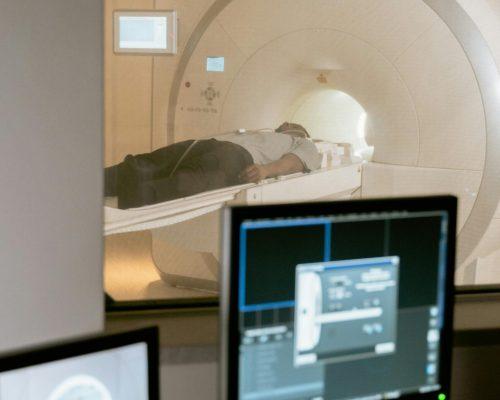
- Patient lies inside a tunnel-shaped scanner
- Loud noises occur during imaging
- Remaining still is essential
Some patients with claustrophobia may find MRI more challenging.
Cost Differences Between CT and MRI
Generally:
CT Scan
- Lower cost
- Faster procedure
- Greater availability
MRI
- Higher cost
- Longer procedure
- More detailed imaging
Insurance coverage varies depending on medical necessity and provider policies.
Can You Have Both Tests?
Yes.
Doctors sometimes order both studies to obtain the most complete picture of a patient's condition.
Examples include:
- Complex stroke evaluations
- Brain tumors
- Persistent neurological symptoms
- Unexplained findings on initial imaging
Using both technologies can improve diagnostic accuracy.
How ER of Coppell Uses Advanced Brain Imaging
At ER of Coppell, rapid diagnosis is essential during emergencies involving the brain and nervous system.
Advanced imaging helps physicians evaluate:
- Stroke symptoms
- Head injuries
- Severe headaches
- Neurological emergencies
- Brain bleeding
By utilizing modern diagnostic technology, ER of Coppell provides timely assessments that support faster treatment decisions and improved patient outcomes.
Benefits of Early Brain Imaging
Prompt imaging can:
- Identify life-threatening conditions quickly
- Reduce treatment delays
- Improve recovery outcomes
- Guide appropriate medical interventions
- Provide peace of mind for patients and families
Seeking immediate medical attention for concerning neurological symptoms can make a significant difference in treatment success.
Conclusion
Both CT scans and MRIs play essential roles in diagnosing brain conditions. CT scans are often the first choice during emergencies because they are fast and effective at detecting bleeding and fractures. MRI scans provide greater detail and are preferred for evaluating tumors, nerve disorders, and many chronic neurological conditions. The best imaging test depends on the patient's symptoms, medical history, and the urgency of the situation. At ER of Coppell, advanced imaging technology helps physicians make accurate diagnoses and deliver prompt emergency care when it matters most.
Frequently Asked Questions
Is a CT scan or MRI better for brain imaging?
MRI generally provides more detailed images of brain tissue, while CT scans are faster and better suited for emergency situations.
Which scan is faster?
CT scans usually take between 5 and 15 minutes, while MRI scans often require 30 to 60 minutes.
Does MRI expose patients to radiation?
No. MRI uses magnetic fields and radio waves rather than radiation.
Can a CT scan detect a brain tumor?
Yes. CT scans can detect many brain tumors, but MRI typically provides more detailed information.
Which test is used first for stroke symptoms?
A CT scan is usually performed first because it quickly identifies brain bleeding and other emergency conditions.
Is MRI safer than CT?
MRI avoids radiation exposure, but both imaging tests are considered safe when performed for appropriate medical reasons.
Can I have an MRI if I have metal implants?
Some metal implants may prevent MRI use. Patients should inform their doctor about any implants before the examination.
For more information visit:https://coppellemergencyroom.com/coppell-er-laboratory-services/x-ray/

 Arabic
 French
 Spanish
 Portuguese
 Deutsch
 Turkish
 Dutch
Dutch
 Italiano
 Russian
 Romaian
 Portuguese (Brazil)
 Greek
Greek