
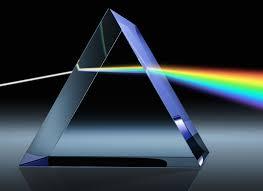
In the world of high-accuracy metrology and AR/VR waveguides, a prism is often treated as a "set and forget" component. However, as we push toward sub-micron tolerances, engineers are encountering a wall where the physical mounting of the glass actually destroys the optical properties of the substrate.
1. The Mounting Stress Birefringence Crisis
When a prism is integrated into a housing, it is typically held by mechanical clamps or high-strength structural adhesives.
-
The Problem: Most optical glass is sensitive to pressure. Even a few Newtons of uneven clamping force can induce stress-induced birefringence.
-
The Result: This alters the refractive index locally, causing the light to split or "smear" as it passes through the prism. For laser applications, this results in a distorted wavefront that no amount of software correction can fix, effectively rendering the $N$-BK7 or Fused Silica substrate useless.
2. TIR Leakage and the "Evanescent Wave" Problem
Total Internal Reflection (TIR) is the fundamental principle behind many prism designs (like the Schmidt-Pechan or Dove prism).
-
The Engineering Hurdle: TIR is not actually "total" if anything touches the reflecting surface. If dust, moisture, or even the wrong type of potting compound comes within a few wavelengths of the reflecting face, the evanescent wave is "frustrated."
-
The Failure: This leads to TIR leakage, where light bleeds out of the prism instead of reflecting. In low-light imaging or long-distance projection, this causes a catastrophic drop in contrast and the introduction of "ghost" artifacts that plague the final image.
3. Thermal Lensing in High-Power Systems
In industrial laser cutting or high-intensity projection, the prism undergoes localized heating.
-
The Failure Point: Because glass has low thermal conductivity, the center of the prism becomes hotter than the edges. This creates a thermal lens effect, where the prism actually changes its focal power during operation.
-
The Impact: As the system warms up, the "zero-point" of the optical path drifts. In B2B manufacturing, this leads to calibration errors and product defects that are difficult to trace back to a simple piece of glass.
Technical Comparison: Adhesive vs. Mechanical Prism Seating
| Integration Method | Primary Risk | Impact on Optical Path | Mitigation Strategy |
| Epoxy Bonding | Shrinkage Stress | Permanent Wavefront Distortion | Use of low-shrinkage RTV silicones |
| Spring Clamping | Point-Load Stress | Localized Birefringence | Kinematic mounts with 3-point contact |
| Air-Gap Housing | TIR Frustration | Contrast Loss / Light Leakage | Hermetic sealing and Nitrogen purging |
The Engineering Path Forward: Active Alignment
To avoid these failures, the industry is moving toward Active Alignment. Instead of relying on the mechanical precision of the housing, the prism is positioned while a laser beam is passed through it in real-time. The adhesive is then UV-cured only when the exit beam reaches the exact coordinates required, compensating for any micro-flaws in the glass geometry itself.
The Bottom Line
The hurdle for 2026 optical systems isn't the quality of the prism coating; it’s the mechanical environment it lives in. If your integration doesn't account for evanescent wave frustration and stress-induced birefringence, even a "Grade A" substrate will perform like a budget component.

 English
 French
 Spanish
 Portuguese
 Deutsch
 Turkish
 Dutch
Dutch
 Italiano
 Russian
 Romaian
 Portuguese (Brazil)
 Greek
Greek